How to Make a Slip Knot and Chain Stitch (Your First Crochet Stitches)
Every crochet project, from a dishcloth to a baby blanket, starts the same way. A slip knot to put the yarn on your hook, and a row of chains to build on. Let's make both.
 Save
What You'll Learn
- How to tie a slip knot that slides and tightens the right way
- How to make a chain stitch, one simple motion at a time
- How to count your chains without losing your place
- What to do when your chain is too tight or uneven
What you’ll need
- Smooth, light-colored yarn in a medium (worsted, #4) weight
- A 5 mm (H-8) crochet hook
- Scissors
A light color makes it so much easier to see your loops. Dark yarn is lovely, but save it for later.
How to make a slip knot
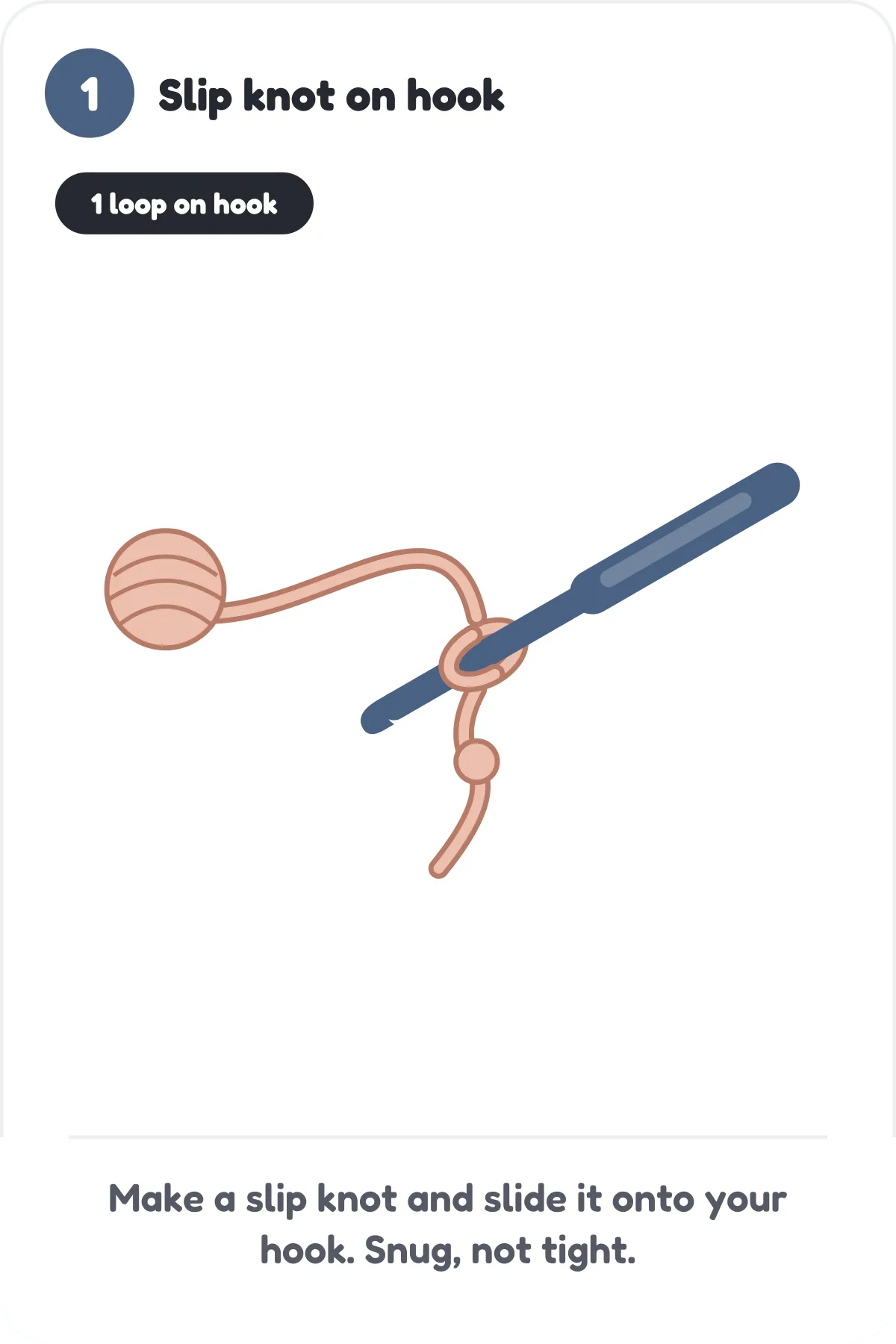
The slip knot is just a loop that tightens when you pull one end. Here’s the easy way to make it:
- Make a loop. Lay the yarn over itself to form a loop, with the tail end underneath.
- Pull a bit of yarn through. Reach through the loop, grab the yarn coming from the ball, and pull a small loop through.
- Put it on your hook. Slide that new loop onto your hook.
- Snug it up. Pull the tail gently. The loop should close around the hook but still slide easily.
If pulling the tail doesn’t tighten the loop, try pulling the working yarn (the end attached to the ball) instead. When it’s right, the working yarn adjusts the size of the loop.
How to make a chain stitch
Chains are the foundation row for most projects. Each one is the same simple motion.
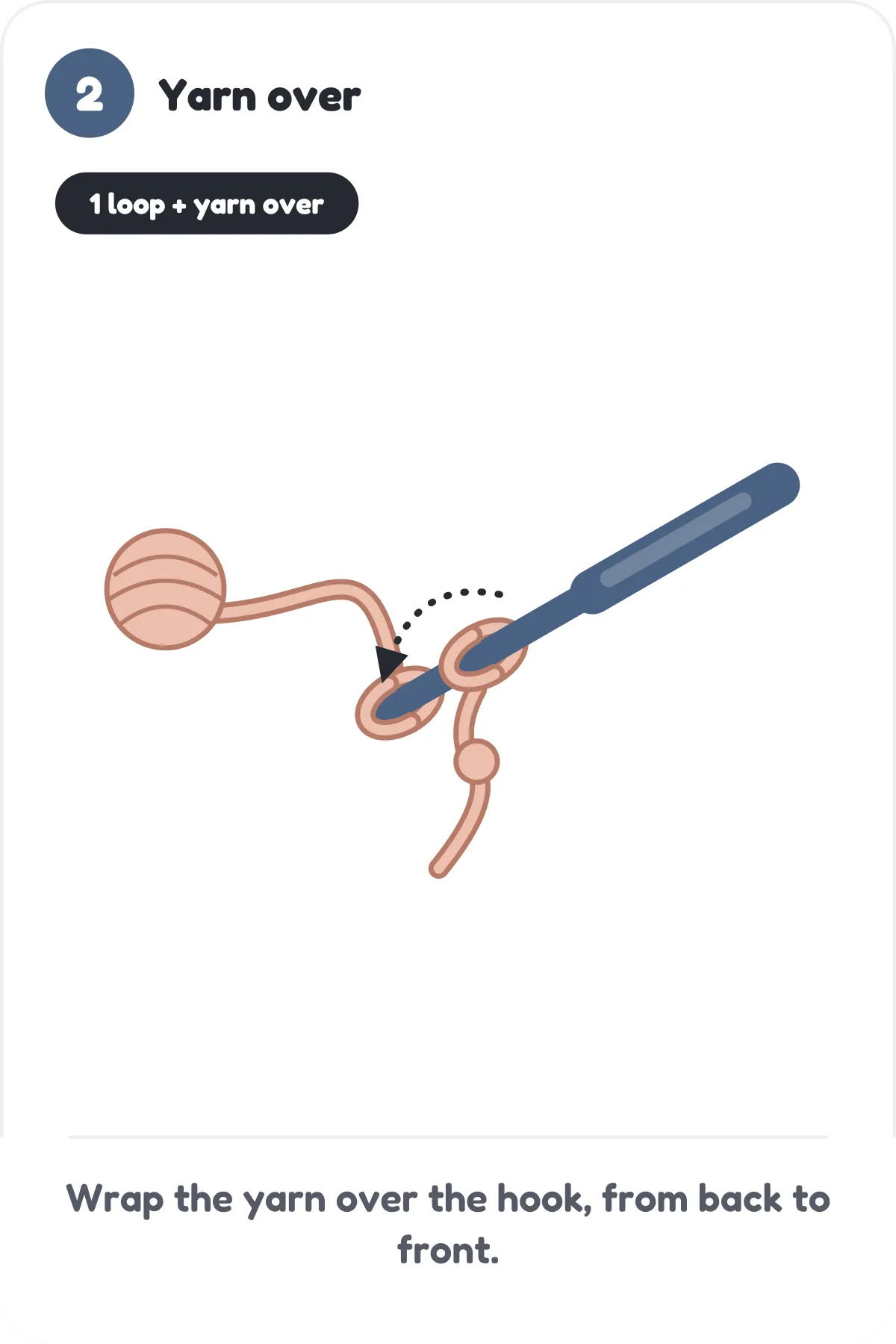
Step 1: Yarn over
Wrap the working yarn over your hook, from back to front. That’s called a “yarn over” (yo), and you’ll do it thousands of times.
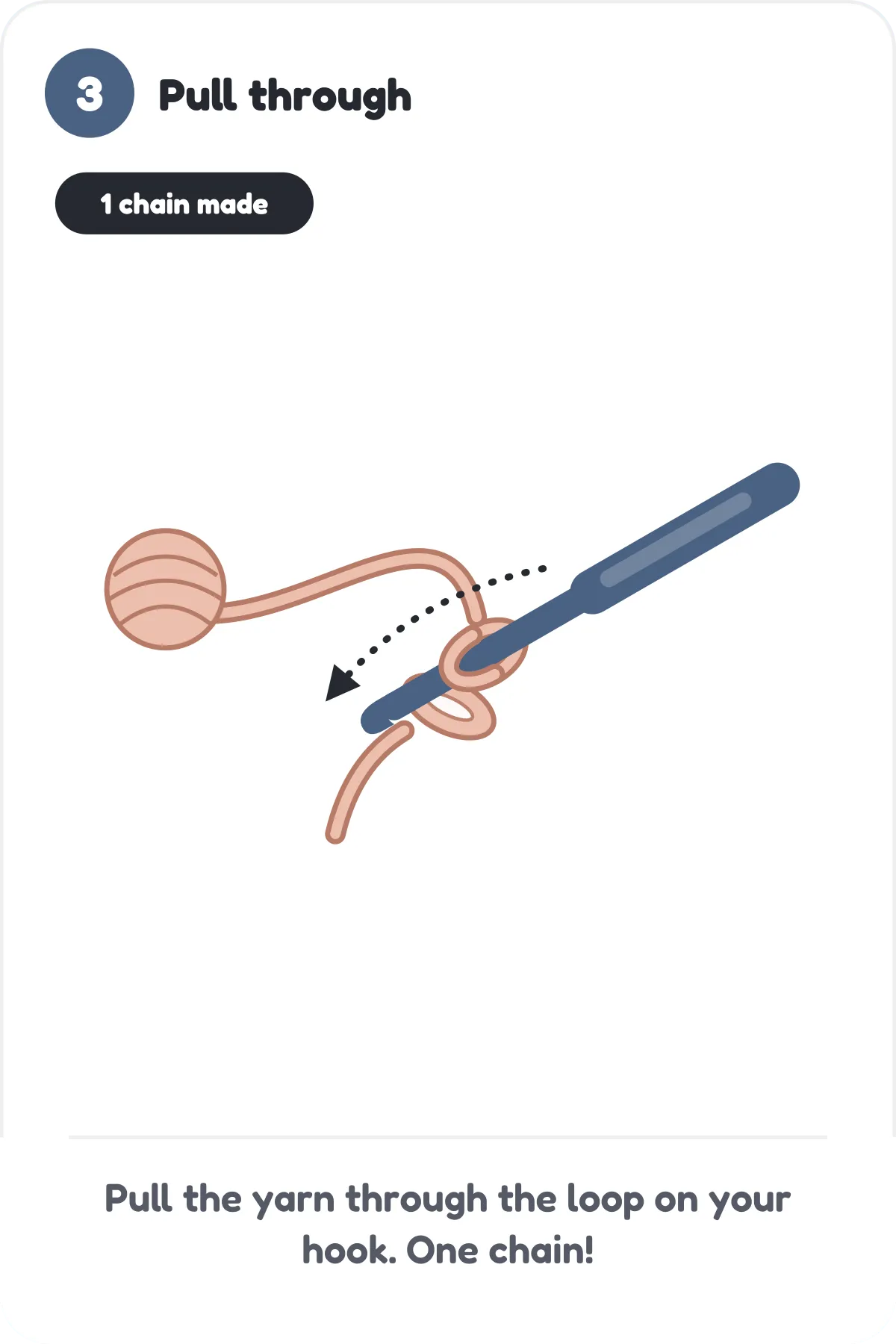
Step 2: Pull it through
Catch the yarn with the hook’s throat and pull it through the loop on your hook. You now have one chain, and one loop still on your hook.
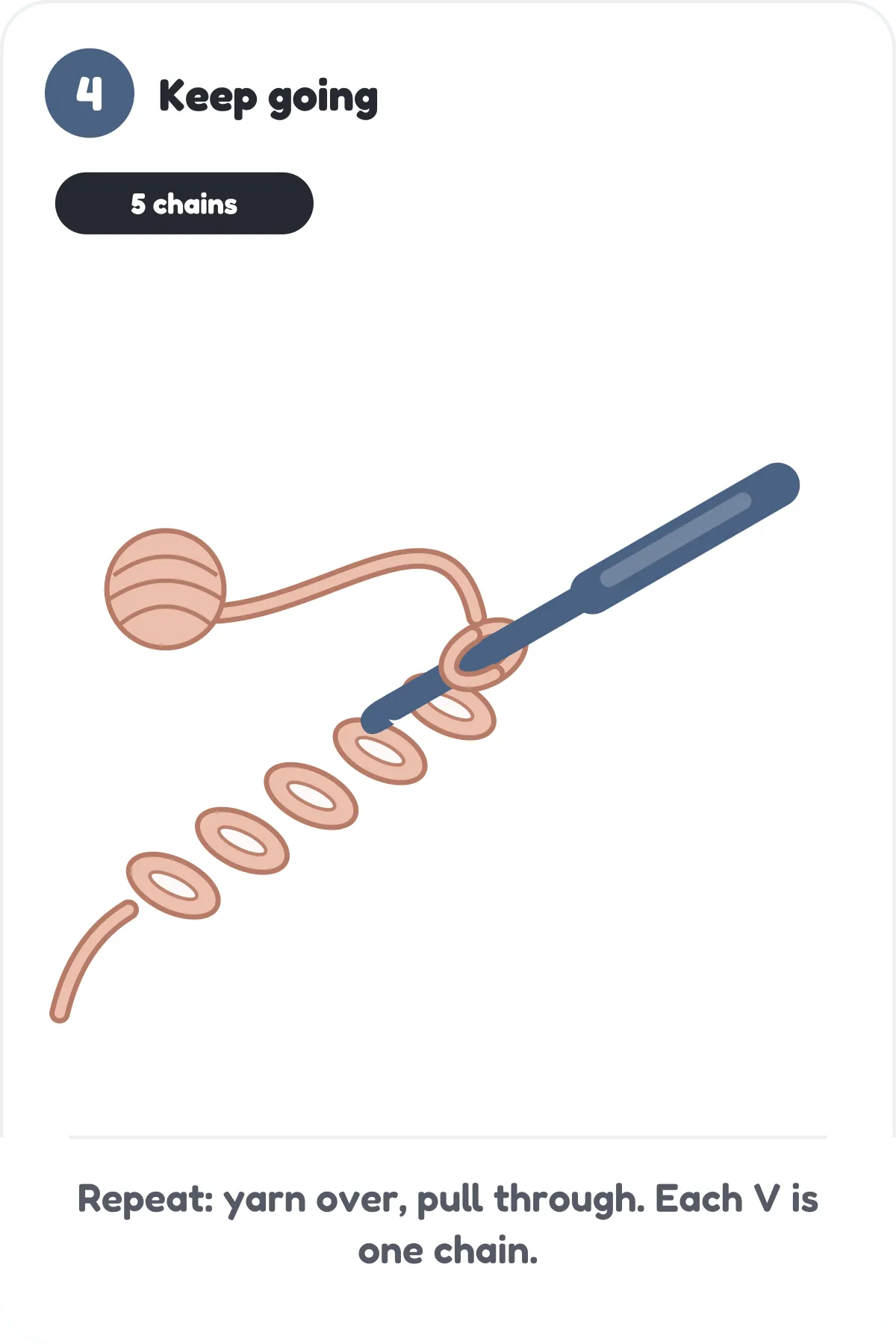
Step 3: Keep going
Yarn over, pull through. Yarn over, pull through. Each time you make a new little “V” below your hook.
How to count your chains
Look at the front of your chain. You’ll see a row of little V shapes, one inside the next. Each V is one chain.
- Don’t count the loop on your hook.
- Don’t count the slip knot.
- Count from the hook down, touching each V as you go.
If a pattern says “ch 20,” you should be able to count twenty Vs.
Common chain troubles (and fixes)
My chain is too tight. You’re probably holding the yarn in a death grip. Loosen up, and push each new loop up onto the thicker part of the hook before you pull it snug.
My chains are all different sizes. That’s tension, and it smooths out with practice. Try to make every pull the same speed and the same distance. A few rows of practice will make a real difference.
The yarn keeps slipping off the hook. Turn the hook so the throat faces down slightly as you pull through. The little hook will hold onto the yarn instead of letting it slide off.
I lost count. It happens to everyone. Clip a stitch marker into every tenth chain, and you’ll only ever have to count to ten.
What to do next
Once you can make a chain of twenty without fighting it, you’re ready for your first real stitch. Head over to How to Single Crochet. It builds right on top of the chain you just made.
When my grandmother taught me the basics at eleven, my first stitches were lumpy and crooked. Everyone’s are. Give yourself some patience, and they’ll even out. 🧶
Frequently asked questions
Does the slip knot count as a chain?
No. The loop of the slip knot that sits on your hook is never counted. Start counting with the first chain you make after it.
Which side of the chain do I work into?
Most patterns don't mind. For beginners, working under the top loop of each chain is easiest. Just stay consistent across the row.
Why is my chain so tight I can't get my hook into it?
This is the most common beginner trouble. Relax your grip on the yarn, and slide each new loop up onto the thick part of your hook before you make the next chain. Some people go up one hook size just for the starting chain.
How many chains should I make to practice?
Twenty is a nice number. It's long enough to get a rhythm going and short enough that it doesn't feel like a chore to count.