The Best Yarn for Beginners (and What to Avoid)
Walking into the yarn aisle for the first time can feel like a lot. Hundreds of colors, strange labels, fuzzy things, sparkly things. The good news is that the best yarn for learning is also one of the simplest and least expensive.
 Save
What You'll Learn
- The yarn weight that's easiest to learn with
- Cotton vs. acrylic, and when to choose each
- Why color matters more than you'd think
- How to read a yarn label
- The yarns to skip until you've got some practice
Start with medium (worsted) weight
Yarn comes in different thicknesses, called weights. They’re numbered from 0 (very fine) to 7 (very chunky).
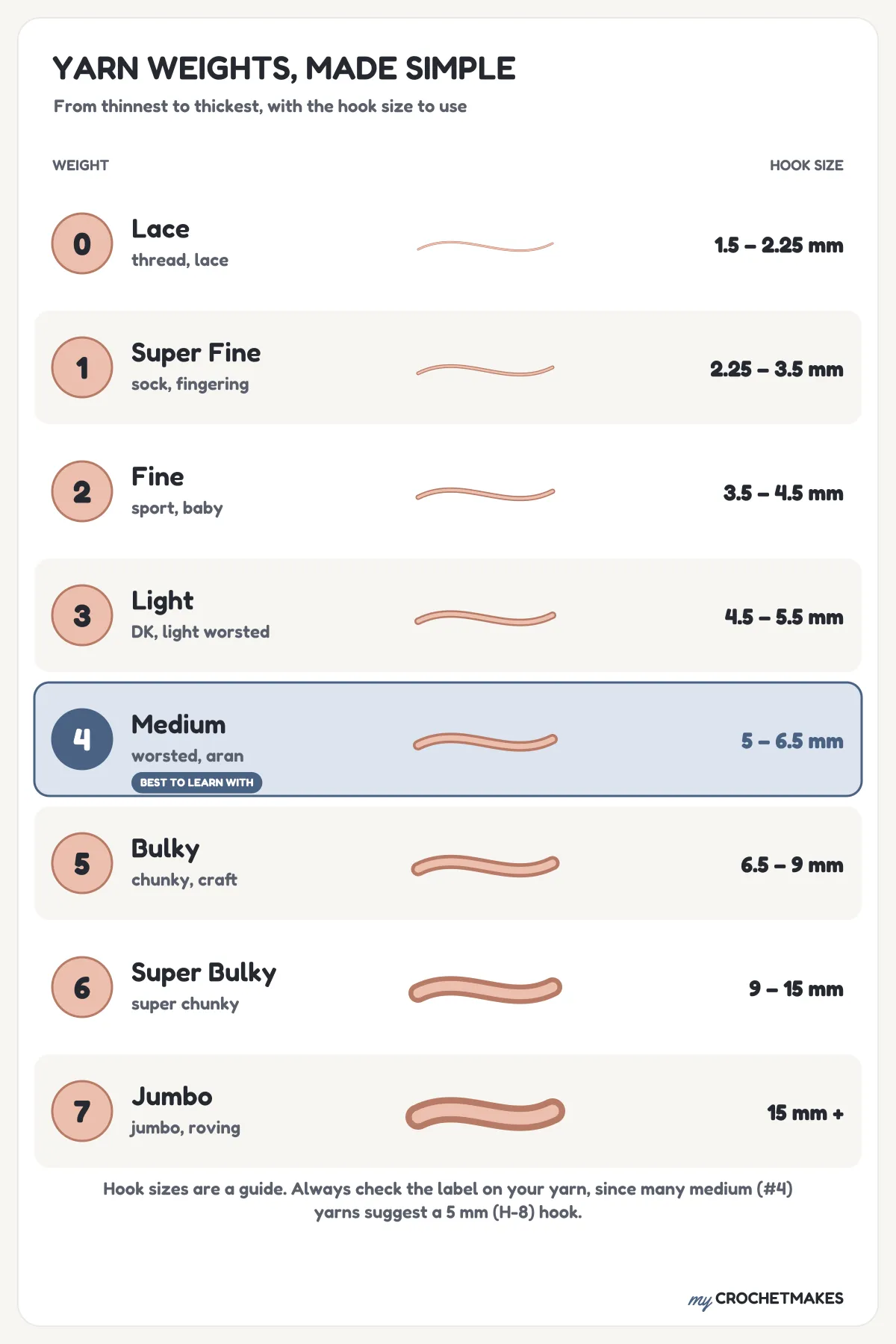
For learning, go right to the middle: medium weight, also called worsted or #4. It’s:
- Thick enough to see each stitch clearly.
- Easy to hold and control.
- Matched with a comfortable hook size, usually 5 mm (H-8).
- Used in tons of beginner patterns.
Very fine yarn makes tiny stitches that are hard to see. Super chunky yarn is fun but can feel clumsy in beginner hands. Medium is just right.
Cotton vs. acrylic
These are the two fibers I reach for most, and both are wonderful for beginners. They’re affordable, easy to find, and easy to wash.
Acrylic
- Soft and a little stretchy, so it’s forgiving if your tension isn’t perfect yet.
- Comes in every color you can imagine.
- Machine washable, so it’s great for blankets and baby gifts.
- Very budget-friendly for practice.
Cotton
- Firm, with crisp, clear stitches, so it’s easy to see where your hook goes.
- Doesn’t stretch much, so it holds its shape.
- Absorbent, which makes it perfect for dishcloths and coasters.
- Can feel a little stiff on your hands at first.
My suggestion: learn your first stitches with a smooth acrylic, then try cotton when you make your first dishcloth. Most of what I make, from cozy blankets to baby gifts, uses one or the other.
Pick a light, solid color
This one surprises people, but it makes a real difference. Choose a light, solid color like cream, pale yellow, light blue or soft pink.
- You can see every loop and stitch clearly.
- Mistakes are easy to spot and fix.
- Your hook won’t get “lost” in the fabric.
Save the dark colors, the variegated (multi-color) yarns and anything with speckles for a little later.
How to read a yarn label
The paper band on a skein has almost everything you need:
- Weight: look for the number in a little yarn ball symbol (you want a 4).
- Fiber: acrylic, cotton, wool or a blend.
- Length: in yards and meters. Patterns tell you how many yards you need.
- Hook size: the suggested crochet hook. A good starting point.
- Care: washing and drying instructions.
- Dye lot: a number for the batch of color. If you buy several skeins for one project, try to get the same dye lot so the color matches.
Yarns to skip for now
These are all lovely yarns, just not for learning:
- Fuzzy or “eyelash” yarn. You can’t see your stitches at all.
- Very thin yarn (lace or fingering weight). Tiny stitches, tiny hooks.
- Splitty yarn, which separates into strands when your hook goes in. It’s frustrating.
- Velvet or chenille-style yarn. Hard to see stitches, and mistakes are tricky to pull out.
- Very dark colors. Wait until stitches feel familiar.
Ready to start?
Grab a skein of light-colored medium weight acrylic and a 5 mm hook, then start with the slip knot and chain stitch. You’ll be making real fabric before you know it.
Frequently asked questions
What is the best yarn weight for beginners?
Medium weight, also called worsted or
Is cotton or acrylic better for beginners?
Both are great. Acrylic is soft, stretchy and forgiving, so it's a little easier for your very first stitches. Cotton is perfect for dishcloths and anything that needs to hold its shape.
What hook size should I use with worsted yarn?
Check the label, but most worsted yarns suggest a 5 mm (H-8) hook. That's a great size to learn with.
Why shouldn't beginners use dark yarn?
It's much harder to see your stitches, so it's harder to tell where to put your hook. Save dark colors for when stitches feel familiar.